
# How to Maintain Leather Goods in Humid Weather
Malaysia’s relentless humidity is leather’s worst enemy. Without proper care, your RM300 wallet turns into a cracked, moldy mess within months, and that leather bag you saved for starts smelling like a wet market.
I have lived in KL for over a decade, and I have watched good leather goods die ugly deaths because their owners did not understand one fundamental truth: leather maintenance in Malaysia is not optional. It is survival.
This guide will teach you the exact system I use to keep my leather goods supple, clean, and odor-free despite our 80% humidity. The process takes 30 minutes every three months and costs less than RM50 per year in supplies.
Difficulty: Easy
Time Required: 30 minutes per session, quarterly
What You Need: RM80–120 in basic supplies, available locally
What You Need
Before you start, gather these supplies. I have tested dozens of products over the years—these work best in Malaysian conditions:
Essential Tools:
- Leather cleaner (RM25–35 on Shopee, brands like Leather Honey or Fiebing’s)
- Leather conditioner (RM30–45, avoid cheap local brands)
- Horsehair brush (RM15–25, get natural bristles from Lazada)
- Microfiber cloths, pack of 5 (RM10–15)
- Cedar shoe trees or stuffing material (RM20–40 per pair)
Optional but Recommended:
- Leather protectant spray (RM25–35, especially for bags)
- Saddle soap for deep cleaning (RM20–30, twice yearly use)
You can find everything at Tangs, Mid Valley, or order from Shopee with better prices. Avoid buying leather care products from hypermarkets—they stock low-quality formulations that do more harm than good in tropical climates.
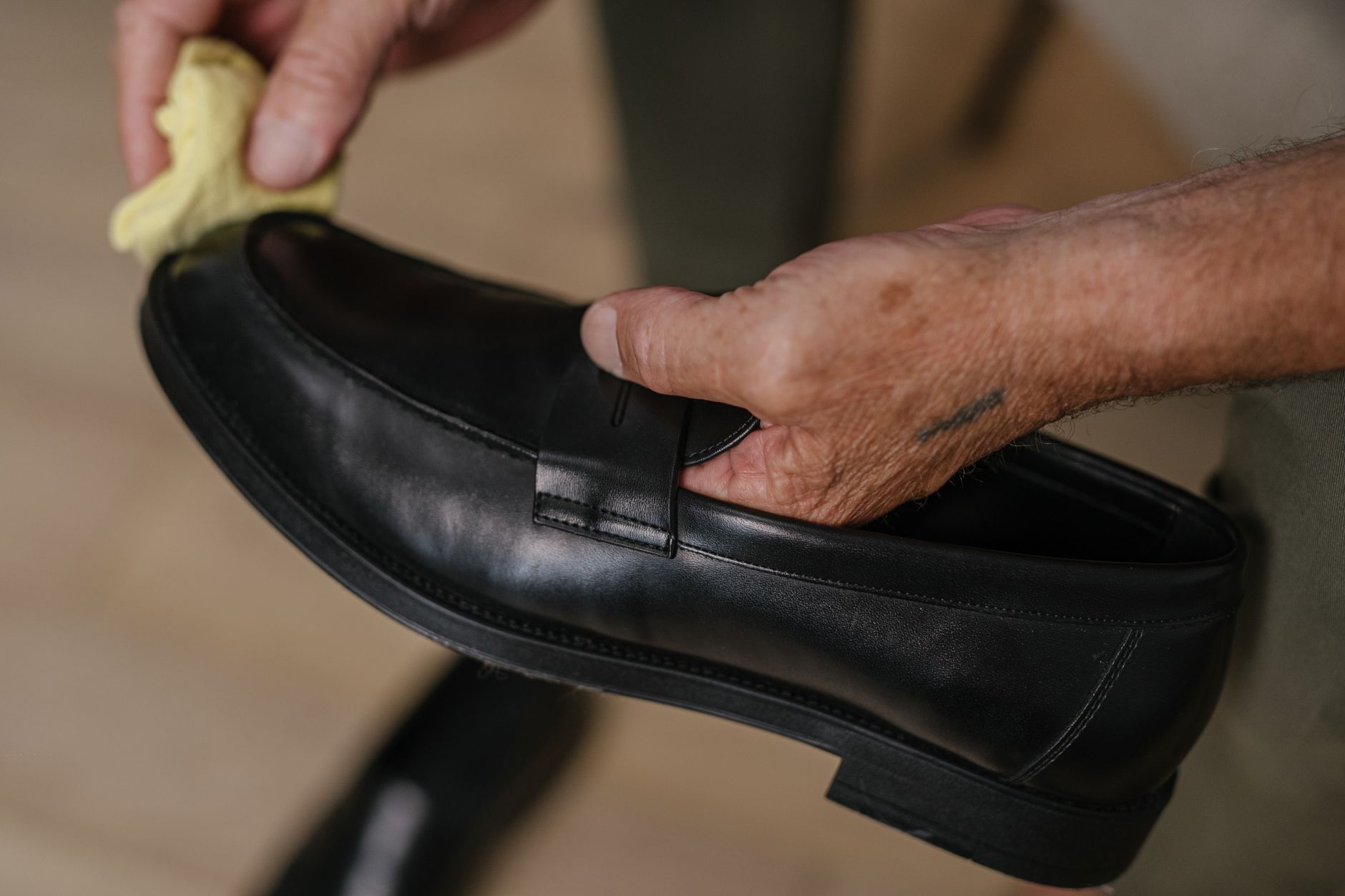
Step 1: Empty and Inspect Your Leather Goods
Remove everything from wallets, bags, and shoes. Check every compartment, especially those card slots where humidity loves to hide.
Look for three warning signs: white mold spots (common on leather stored in Malaysian wardrobes), cracking along stress points, and that musty smell that means moisture has penetrated the leather. Early detection saves you from costly replacement.
Empty items should breathe for 10–15 minutes in air-conditioned space before cleaning. Never rush this step—trapped moisture under leather care products creates the perfect breeding ground for mold.
Time estimate: 5 minutes per item

Step 2: Dust and Surface Clean
Use your horsehair brush to remove surface dust and dirt. Malaysian dust is particularly fine and clings to leather texture, creating abrasive buildup over time.
Brush in circular motions for smooth leather, following the grain direction for textured pieces. Pay special attention to seams and stitching where grime accumulates.
For stubborn dirt, barely dampen a microfiber cloth with distilled water. Never use tap water—KL’s chlorinated water leaves mineral deposits that damage leather over time.
Time estimate: 3–5 minutes per item
Step 3: Apply Leather Cleaner
This is where most people go wrong. Malaysian humidity means leather attracts more dirt and body oils than in temperate climates, requiring stronger cleaning action.
Apply cleaner to a microfiber cloth, never directly to the leather. Work in small sections, using gentle circular motions. The cleaner should remove embedded grime without oversaturating the leather.
Let each section dry for 2–3 minutes before moving on. In Malaysian humidity, rushing this step traps moisture and leads to mold within weeks.
Time estimate: 8–10 minutes for thorough cleaning

Step 4: Condition the Leather
Here is the step that separates amateur leather care from professional results. Malaysian conditions require conditioning every 3 months, not the 6–12 months suggested on most product labels.
Apply conditioner sparingly with a clean microfiber cloth. Less is more—over-conditioning in humid weather creates a tacky surface that attracts more dirt. Work the conditioner into the leather using small circular motions.
Focus on stress points: wallet fold lines, bag handles, shoe flex areas. These dry out fastest in air-conditioned offices and crack quickest when you step outside into humid air.
Time estimate: 10–15 minutes, including absorption time

Step 5: Final Protection and Storage
Apply leather protectant spray if your item sees regular outdoor use. Malaysian rain can destroy unprotected leather in a single downpour.
Spray from 6 inches away in light, even coats. Let dry completely—at least 15 minutes in air-conditioned space, longer in humid conditions.
Store leather goods with cedar shoe trees or acid-free tissue paper to maintain shape. Never store in plastic bags or airtight containers in Malaysian humidity—you are creating a mold factory.
Time estimate: 5 minutes active work, 15–20 minutes drying time
Common Mistakes That Destroy Leather in Malaysia
I have seen these mistakes destroy expensive leather goods across KL and Penang. Avoid them completely:
Using baby wipes or alcohol: Both strip natural oils and accelerate cracking in humid conditions. Malaysian men love convenience, but leather demands proper products.
Storing leather in wardrobes without circulation: Malaysian wardrobes trap humidity. Use silica gel packets or ensure air circulation around leather storage areas.
Applying conditioner to wet leather: Never condition leather that feels damp from humidity. The conditioner cannot penetrate, creating a surface layer that attracts dirt and mold.
Buying cheap local leather care products: RM8 “leather cream” from hypermarkets contains petroleum products that clog leather pores. Invest in quality—your RM500 bag deserves better.

Your Malaysian Leather Maintenance Schedule
Malaysian humidity demands consistent care, not the “when I remember” approach that works in drier climates.
Monthly: Quick dust with horsehair brush, especially for daily-use items like wallets and belts.
Quarterly: Full cleaning and conditioning routine as outlined above. Mark your calendar—consistency prevents emergency repairs.
Bi-annually: Deep clean with saddle soap for heavily-used items. This is also when I assess whether any pieces need professional restoration.
Before monsoon season: Apply extra protectant to bags and shoes. Malaysian rain is leather’s nemesis.
Taking It Further
Master this basic routine, and you will keep leather goods looking new for years in Malaysian conditions. Your leather develops character without deterioration—the way it should.
Start with your most expensive piece and work through your collection systematically. Within a few sessions, you will recognize how properly-maintained leather should look and feel.
Quality leather goods are investments in Malaysian heat and humidity. Treat them accordingly, and they will serve you for decades instead of months.
Execute this routine every three months, and your leather goods will outlast the humid Malaysian climate that destroys lesser-maintained pieces. No excuses—just consistent, proper care.
0 Comments