
Your suits are investments that can last decades — if you know how to protect them from Malaysia’s relentless humidity, sudden downpours, and year-round heat. I have maintained a rotation of wool and linen suits across five years in KL, and the difference between proper tropical care and generic advice is the difference between a suit that ages gracefully and one that becomes unwearable within 18 months.
This guide will teach you a maintenance system that keeps your suits looking sharp and lasting longer in our climate. Time required: 30 minutes weekly, plus 2 hours monthly for deep maintenance. Difficulty: Moderate — requires consistent habits and the right tools. What makes this different: Every step is tailored for Malaysia’s 80%+ humidity and temperature swings between air-conditioned offices and outdoor heat.
What You Need
Your tropical suit maintenance arsenal should include these tools, available locally:
- Cedar hangers — RM25–40 each (Shopee, Lazada, or Isetan)
- Suit brush with natural bristles — RM35–60 (departmental stores, tailoring shops)
- Moisture absorber sachets — RM15–25 per pack (Guardian, Watsons)
- Garment steamer — RM80–150 (electrical stores, online)
- Lint roller — RM8–15 (convenience stores, supermarkets)
- Cedar blocks — RM20–35 (home goods stores, Daiso)
- Fabric freshening spray — RM18–30 (supermarkets)

The cedar hangers are non-negotiable. Plastic and wire hangers will deform your suit shoulders, and in Malaysian humidity, they provide zero moisture protection.
Step 1: Master the Daily Hang (Time: 2 minutes)
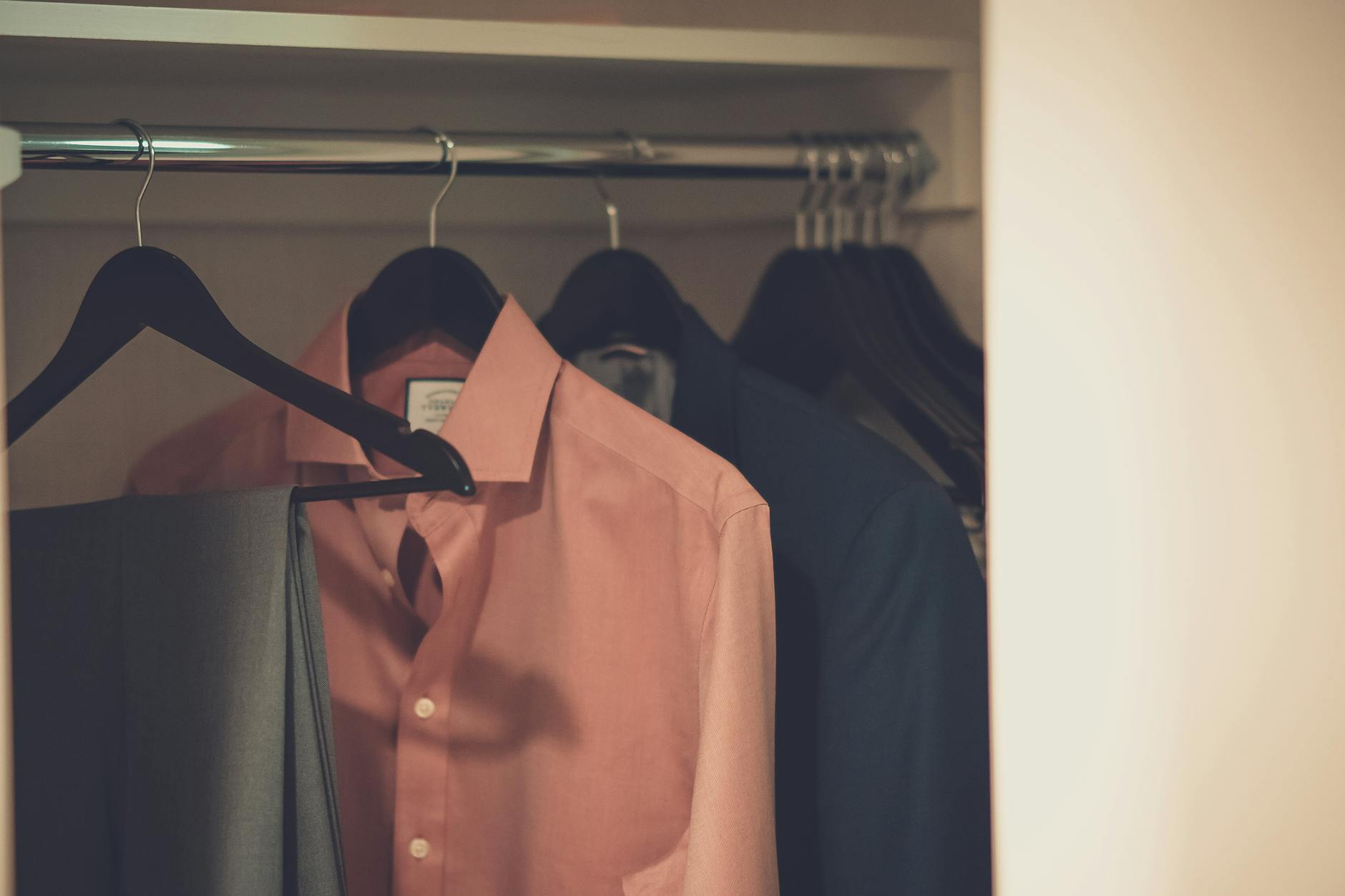
The moment you come home, your suit goes on a cedar hanger — not draped over a chair, not left in a heap. Cedar naturally absorbs moisture and repels insects, both critical in our climate.
Unbutton everything: jacket, vest if you wear one, trousers. Turn out the pockets to let air circulate. I learned this the hard way when trapped moisture in a trouser pocket created a permanent damp spot that took professional cleaning to remove.
Hang trousers by the cuffs, not folded over a hanger bar. This prevents creasing and allows better airflow around the waistband where sweat accumulates most.
Common mistake: Hanging suits in enclosed wardrobes immediately. Let them air out in your room for 30 minutes first, then move to storage.
Step 2: Brush After Every Wear (Time: 3 minutes)
Natural bristle brushes remove surface dust, lint, and light stains before they set. In Malaysia, dust from construction, haze, and general urban particles cling to wool fibers faster than in temperate climates.
Brush in long, gentle strokes following the fabric weave. Start from the shoulders, work down the lapels, then the back and sleeves. For trousers, brush from waistband to hem.
Pay extra attention to areas where your body makes contact: underarms, back, seat, and inner thighs. These zones collect the most sweat and oils.
Why this matters: Regular brushing extends the time between dry cleans. In Malaysian conditions, a brushed suit can go 8–10 wears between cleaning versus 4–5 without brushing.

Step 3: Control Moisture and Odor (Time: 5 minutes weekly)
Malaysia’s humidity is your suit’s biggest enemy. Place cedar blocks and moisture absorber sachets in your wardrobe, replacing sachets every 6–8 weeks during rainy season, every 10–12 weeks during drier periods.
For odor control, lightly mist suits with fabric freshening spray after airing, never while wearing. Focus on interior areas where body heat concentrates.
If a suit smells after one wear — common during humid months — hang it near a fan overnight. Direct sunlight fades colors, but indirect airflow in a well-ventilated room works perfectly.
The rotation rule: Never wear the same suit two days running. Wool needs 24 hours minimum to release trapped moisture. I rotate between three suits weekly, giving each proper recovery time.

Step 4: Weekly Deep Inspection (Time: 15 minutes)
Every Sunday, inspect each suit for: loose buttons, small stains, loose threads, and early signs of wear at stress points (armholes, pocket edges, trouser cuffs).
Check for moth damage — small holes or thin spots. Cedar helps prevent moths, but inspect regularly. In Malaysia’s climate, fabric moths can establish quickly if conditions are right.
Remove lint with a quality lint roller, working in one direction. Cheap rollers leave residue; invest in a good one from Muji or similar retailers.
Spot cleaning protocol: For minor stains, dab with a clean, damp cloth. Never rub — this spreads the stain and damages fibers. If the stain persists after air drying, mark it for professional attention.
Step 5: Professional Cleaning Schedule (Time: 30 minutes quarterly)
In Malaysia, suits need professional dry cleaning every 10–15 wears, more frequently than the 20–25 wear standard in cooler climates. Humidity accelerates soil buildup and increases bacterial growth.
Choose a dry cleaner experienced with quality menswear. I recommend getting recommendations from local tailors — they know who handles expensive fabrics properly.
Before dropping off, point out any stains and mention when they occurred. Fresh stains have better removal odds than set stains.
Seasonal timing: Schedule deep cleans before major humidity spikes (March-April, October-November) when suits work hardest against the climate.

Step 6: Seasonal Storage Protocol (Time: 45 minutes twice yearly)
Malaysian “seasons” mean adjusting storage for monsoon versus dry periods. During heavy rain months, increase moisture control and air circulation.
For suits worn infrequently, use breathable garment bags with cedar elements inside. Never use plastic bags — trapped moisture creates mold and mildew.
Store in the coolest, driest part of your home. If possible, avoid ground-floor wardrobes during flood season when humidity spikes dramatically.
Climate-specific tip: During haze season, suits collect more particulates. Increase brushing frequency and consider light steaming to remove embedded particles.
Common Mistakes That Ruin Suits in Malaysian Climate
These errors destroy more suits than normal wear:
Immediate storage after wearing: Trapping body heat and moisture creates perfect conditions for bacterial growth and fabric degradation.
Using regular hangers: Wire and plastic provide no moisture protection and create pressure points that deform shoulders permanently.
Over-cleaning: Some men dry clean after every wear. This strips natural oils from wool and shortens suit life significantly.
Ignoring minor issues: Small problems become expensive repairs in humid conditions where damage accelerates.
Wrong storage location: Ground floor, external wall wardrobes, or areas near bathrooms create humidity problems that cedar cannot overcome.
Your Malaysian Suit Maintenance Schedule
Follow this rhythm for optimal suit longevity in our climate:
Daily: Proper hanging, pocket emptying, initial airing
Weekly: Thorough brushing, moisture control check, basic inspection
Monthly: Deep inspection, rotation assessment, storage area review
Quarterly: Professional dry cleaning for frequently worn suits
Bi-annually: Complete wardrobe review, seasonal storage adjustment
The key insight: Malaysian conditions accelerate everything — soil buildup, moisture damage, insect attraction, and fabric degradation. Your maintenance schedule must match this accelerated timeline.
I have suits that are five years old and still receive compliments because I treat tropical maintenance as seriously as the initial purchase. The difference between a RM2,000 suit that lasts two years and one that lasts ten years is not the fabric quality — it is the daily habits.
Start with proper hangers and consistent brushing. These two changes alone will extend your suits’ life by 40% in Malaysian conditions. Add proper moisture control, and you are protecting investments that should serve you for decades.
Your suits represent significant financial investment and daily confidence. Treat them with the systematic care they deserve, and they will reward you with consistent performance regardless of what Malaysia’s climate throws at them.
0 Comments